سفر کی دعا – سفر کے لیے مکمل اسلامی دعا اور رہنما اصول
Traveling is an integral part of life, whether for work, family, Umrah/Hajj, or leisure. In Islam, embarking on a journey (Safar) comes with beautiful Sunnah supplications taught by Prophet Muhammad ﷺ to seek Allah’s protection, ease, and blessings. The most authentic and widely recited Safar ki Dua reminds us of our dependence on Allah SWT while expressing gratitude for the means of travel.
This comprehensive guide covers the full duas, authentic sources, translations (Arabic, Urdu, English, transliteration), benefits, etiquette, and more – making it your ultimate resource for safe journeys, InshaAllah.
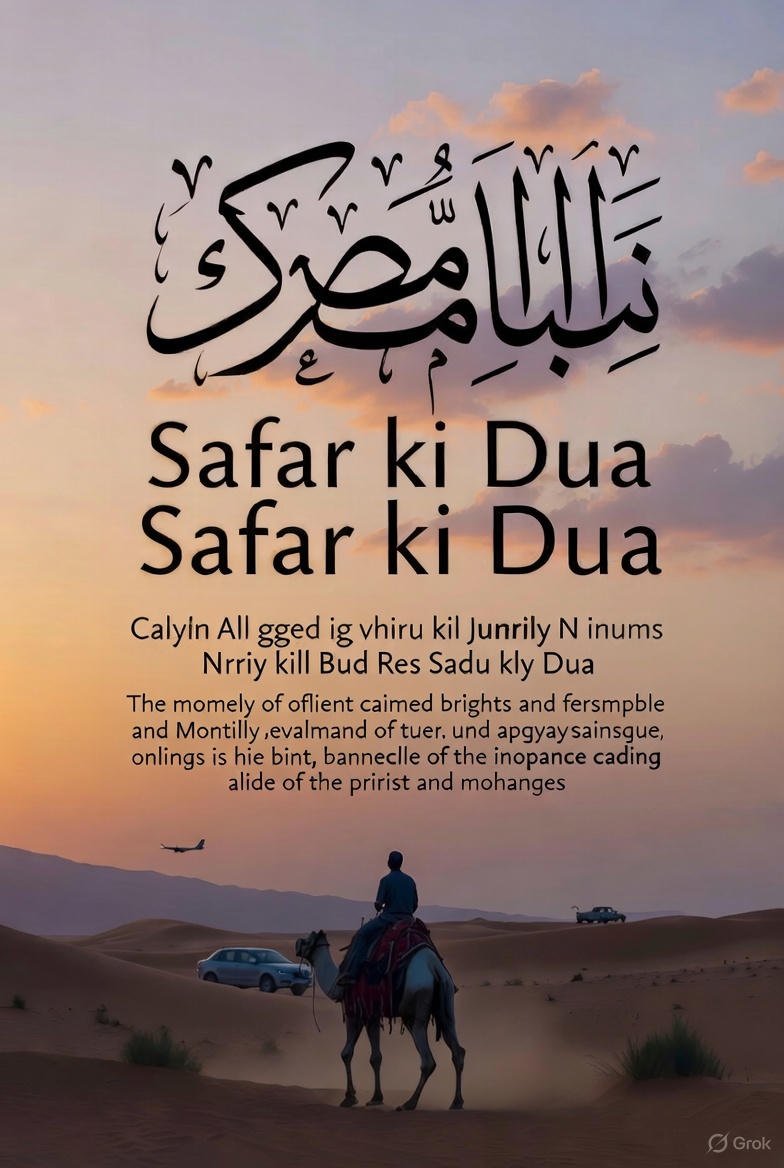
(Illustration depicting travel in the time of Prophet Muhammad ﷺ – journeys were often on camels, highlighting the risks and reliance on Allah)
The Primary Safar Ki Dua (When Mounting the Vehicle or Starting the Journey)
This is the core dua, directly from the Quran and emphasized in Hadith.
Arabic:
سُبْحَانَ الَّذِي سَخَّرَ لَنَا هَذَا وَمَا كُنَّا لَهُ مُقْرِنِينَ ۖ وَإِنَّا إِلَىٰ رَبِّنَا لَمُنقَلِبُونَ
Transliteration:
Subḥāna al-ladhī sakhkhara lanā hādhā wa mā kunnā lahu muqrinīn. Wa innā ilā rabbinā lamunqalibūn.
Urdu Translation:
پاک ہے وہ ذات جس نے اس سواری کو ہمارے زیر فرمان کر دیا حالانکہ ہم اس پر قابو پانے والے نہ تھے، اور بے شک ہم اپنے رب کی طرف پلٹنے والے ہیں۔
English Translation:
“Glory be to Him who has subjected this (vehicle) to us, and we could never have accomplished it by ourselves. And indeed, to our Lord we will surely return.”
Quranic Source: Surah Az-Zukhruf (43:13-14)
Hadith Reference: Sahih Muslim 1342 – The Prophet ﷺ instructed to say Allahu Akbar three times upon mounting, then recite this dua.
The Extended Dua for Travel (Most Comprehensive)
This longer dua is highly recommended for overall blessings during the journey.
Arabic:
اللَّهُمَّ إِنَّا نَسْأَلُكَ فِي سَفَرِنَا هَذَا الْبِرَّ وَالتَّقْوَىٰ، وَمِنَ الْعَمَلِ مَا تَرْضَىٰ، اللَّهُمَّ هَوِّنْ عَلَيْنَا سَفَرَنَا هَذَا وَاطْوِ عَنَّا بُعْدَهُ، اللَّهُمَّ أَنْتَ الصَّاحِبُ فِي السَّفَرِ، وَالْخَلِيفَةُ فِي الْأَهْلِ، اللَّهُمَّ إِنِّي أَعُوذُ بِكَ مِنْ وَعْثَاءِ السَّفَرِ، وَكَآبَةِ الْمَنْظَرِ، وَسُوءِ الْمُنْقَلَبِ فِي الْمَالِ وَالْأَهْلِ
Transliteration:
Allahumma inna nas’aluka fi safarina hadha al-birra wat-taqwa, wa min al-‘amali ma tarda. Allahumma hawwin ‘alayna safarana hadha watwi ‘anna bu’dahu. Allahumma anta as-sahibu fis-safar, wal-khalifatu fil-ahl. Allahumma inni a’udhu bika min wa’tha’is-safar, wa ka’abatil-manzar, wa su’il-munqalabi fil-mali wal-ahl.
Urdu Translation:
اے اللہ! ہم تجھ سے اس سفر میں نیکی اور تقویٰ مانگتے ہیں، اور ایسی عمل کی توفیق جو تجھے پسند ہو۔ اے اللہ! اس سفر کو ہمارے لیے آسان فرما اور اس کی دوری کو ہمارے لیے سمیٹ دے۔ اے اللہ! تو سفر میں ہمارا ساتھی ہے اور گھر میں خلیفہ ہے۔ اے اللہ! میں تیری پناہ مانگتا ہوں سفر کی مشقت سے، غمگین منظر سے، اور مال اور اہل میں برے پلٹنے سے۔
English Translation:
“O Allah, we ask You for righteousness and piety in this journey of ours, and deeds that are pleasing to You. O Allah, make this journey easy for us and shorten its distance. O Allah, You are the Companion on the journey and the Guardian of the family. O Allah, I seek refuge in You from the difficulties of travel, from a gloomy scene, and from an evil return in wealth and family.”
Hadith Source: Sahih Muslim & Sunan Abu Dawud
Other Important Duas Related to Travel
- Upon Leaving Home:
بِسْمِ اللَّهِ تَوَكَّلْتُ عَلَى اللَّهِ وَلَا حَوْلَ وَلَا قُوَّةَ إِلَّا بِاللَّهِ
(Bismillah, tawakkaltu ‘ala Allah, wa la hawla wa la quwwata illa billah)
Meaning: In the name of Allah, I place my trust in Allah, and there is no power nor strength except with Allah. (Abu Dawud) - For Protection (Recite Anytime):
أَعُوذُ بِكَلِمَاتِ اللَّهِ التَّامَّاتِ مِنْ شَرِّ مَا خَلَقَ
(A’udhu bikalimatillahit-tammati min sharri ma khalaq)
Meaning: I seek refuge in the perfect words of Allah from the evil of what He has created. (Sahih Muslim) - Upon Returning Home:
آيِبُونَ تَائِبُونَ عَابِدُونَ لِرَبِّنَا حَامِدُونَ
(A’ibuna ta’ibuna ‘abiduna lirabbina hamidun)
Meaning: We return, repenting, worshipping, and praising our Lord.
Benefits of Reciting Safar Ki Dua
- Spiritual Protection: Shields from accidents, harm, and evil (as per Hadith promises).
- Ease & Blessings: Makes the journey smoother, reduces fatigue, and brings barakah.
- Strengthens Tawakkul: Reminds us that everything is in Allah’s control.
- Psychological Peace: Reduces anxiety and instills calmness.
- Reward & Forgiveness: Sunnah act that earns immense ajr and can lead to acceptance of other duas.
Reciting these regularly turns every trip into an act of worship. For modern travel (car, plane, train), the same duas apply – say them when boarding!
Print these, share with family, or save as phone wallpaper. May Allah make all your journeys safe and blessed. Ameen.
FAQs:
1. When should I recite Safar ki Dua?
Recite it when starting the journey, especially upon mounting or sitting in the vehicle (car, plane, train, etc.). Say Allahu Akbar three times first, then the main dua. The extended dua can be said before or during travel.
2. Is Safar ki Dua applicable for short trips or only long journeys?
It applies to any journey outside your usual routine, even short trips like going to work or visiting nearby family. The Prophet ﷺ recited it for all travels.
3. Can I recite Safar ki Dua in my own language if I don’t know Arabic?
Yes, understanding the meaning is important for khushu (focus). Recite in Arabic for full reward, but you can say the translation in English/Urdu for sincerity.
4. Is the traveler’s dua more likely to be accepted?
Yes, according to Hadith (Tirmidhi), the dua of the traveler is one of the three supplications most likely to be answered, along with the parent’s and the fasting person’s.
5. What if I’m driving or flying – when exactly to say it?
Say it right after sitting and fastening your seatbelt (or starting the engine). For flights, after boarding and settling in.
6. Do I need to recite it aloud or silently?
It can be recited quietly or aloud; the Prophet ﷺ often said it aloud when on camel.
7. Is there a specific dua for returning home?
Yes, add “آيِبُونَ تَائِبُونَ عَابِدُونَ لِرَبِّنَا حَامِدُونَ” (We return repenting, worshipping, and praising our Lord) upon arrival.
8. Can women recite the same Safar ki Dua?
Absolutely, it’s for all Muslims, men and women.
9. What are the sources/authenticity of these duas?
The main ones are from Quran (43:13-14) and authentic Hadiths in Sahih Muslim, Abu Dawud, and Tirmidhi.
10. How can I memorize Safar ki Dua easily?
Start with the short version, repeat it daily before short trips, use audio recitations, or print it as a car hanger/sticker.